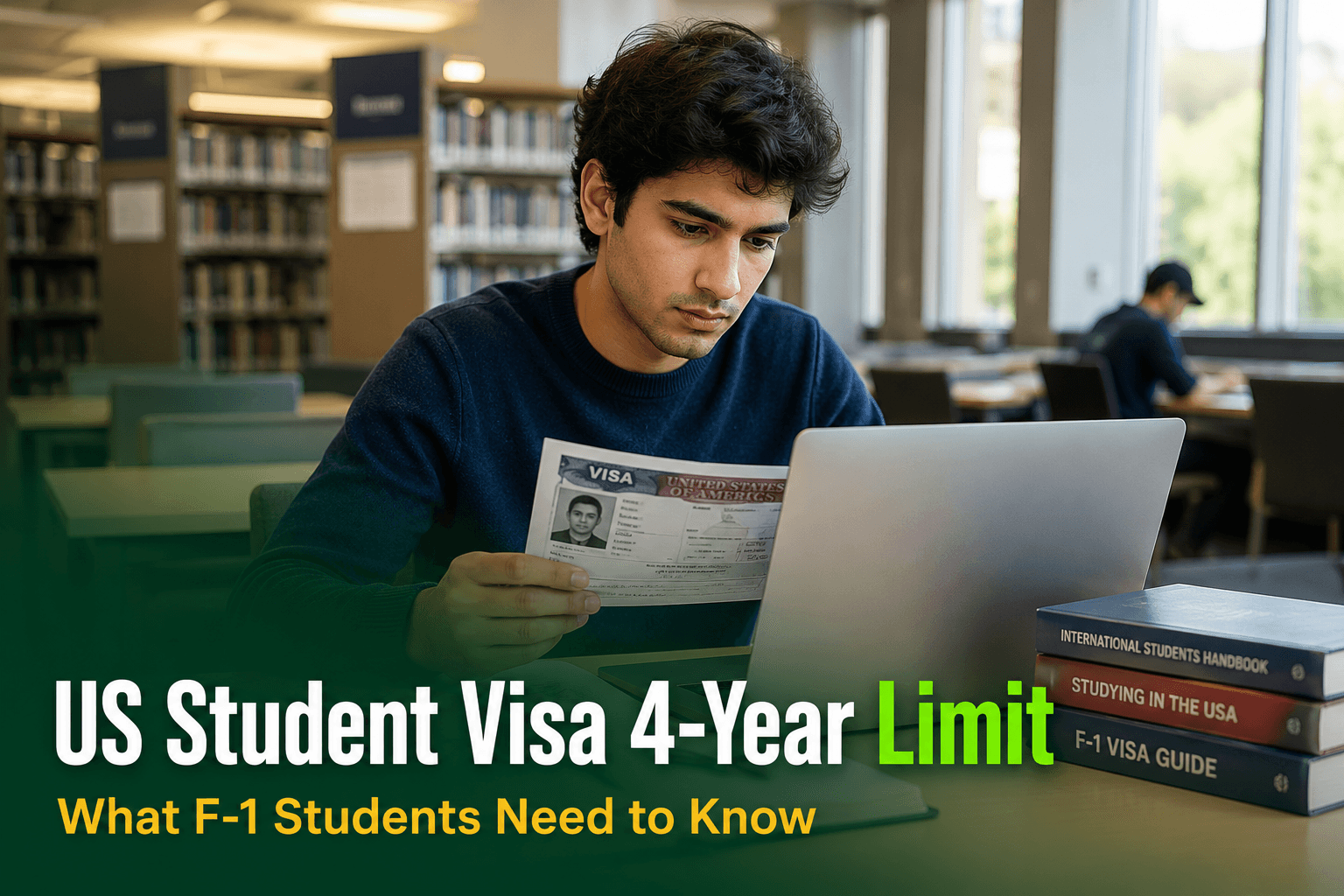
The United States has ended a policy that international students relied on for nearly five decades, and if you're planning to study in the US or are already there on an F-1 or J-1 visa, this is a change worth understanding before it takes effect.
What "Duration of Status" Used to Mean
Since 1978, F-1 students and J-1 exchange visitors were admitted to the US under a rule called "Duration of Status" (D/S) — meaning they could legally remain for as long as they were actively enrolled in their academic program, with no fixed exit date tied to their visa itself. A PhD student taking six or seven years to finish, for example, faced no automatic deadline under the old system.
What's Changing
Under the new DHS rule, F-1 and J-1 visa holders will generally be admitted for a fixed period of up to four years, regardless of how long their specific program is expected to take. If you need more time to complete your degree, you will have to formally apply for an extension through USCIS and pay a fee — rather than simply continuing to study under your original admission.
The rule also introduces tighter restrictions on how freely international students can change their major or transfer between institutions once they're already in the US.
Why the US Government Made This Change
According to the Department of Homeland Security, the goal is to close what officials describe as a loophole allowing "forever students" to remain enrolled indefinitely without renewed vetting. In an official statement, the Secretary of Homeland Security said the rule is meant to keep foreign students focused on completing their studies and returning home, framing it as a national security and accountability measure.
What Critics Are Saying
Education leaders and immigration experts have pushed back, arguing that:
- Four years is genuinely too short for a significant share of legitimate students, especially in STEM and research-heavy PhD programs
- The added uncertainty and cost of extension applications could discourage talented students from choosing the US at all
- International students make up a substantial share of enrollment at many universities — reportedly as much as a fifth of the student body on some campuses
Timeline: When You Need to Pay Attention
| Milestone | Date |
|---|---|
| Rule finalized and announced | Around July 16–17, 2026 |
| Rule takes effect (60 days after publication) | Approximately mid-September 2026 |
| Fiscal Year 2026 ends (relevant to broader US visa processing) | September 30, 2026 |
What You Should Do Now
- If you're currently studying in the US on an F-1 or J-1 visa, contact your school's international student office (your Designated School Official) to understand exactly how the transition applies to your specific program and timeline.
- If you're planning to apply to study in the US, factor the four-year limit into your program choice and financial planning, especially for longer degrees.
- Watch for further USCIS guidance on the extension application process, since the practical details of "how easy is it to actually extend" will matter enormously for anyone in a longer program.
Final Thoughts
If you're a Pakistani student with US study plans, or already studying there, this rule is worth tracking closely over the coming weeks as more implementation guidance emerges. The core takeaway for now: don't assume "duration of status" protection still applies, start budgeting for a possible extension application if your program runs long, and stay in close contact with your school's international student office as the mid-September effective date approaches.
Official source: US Department of Homeland Security