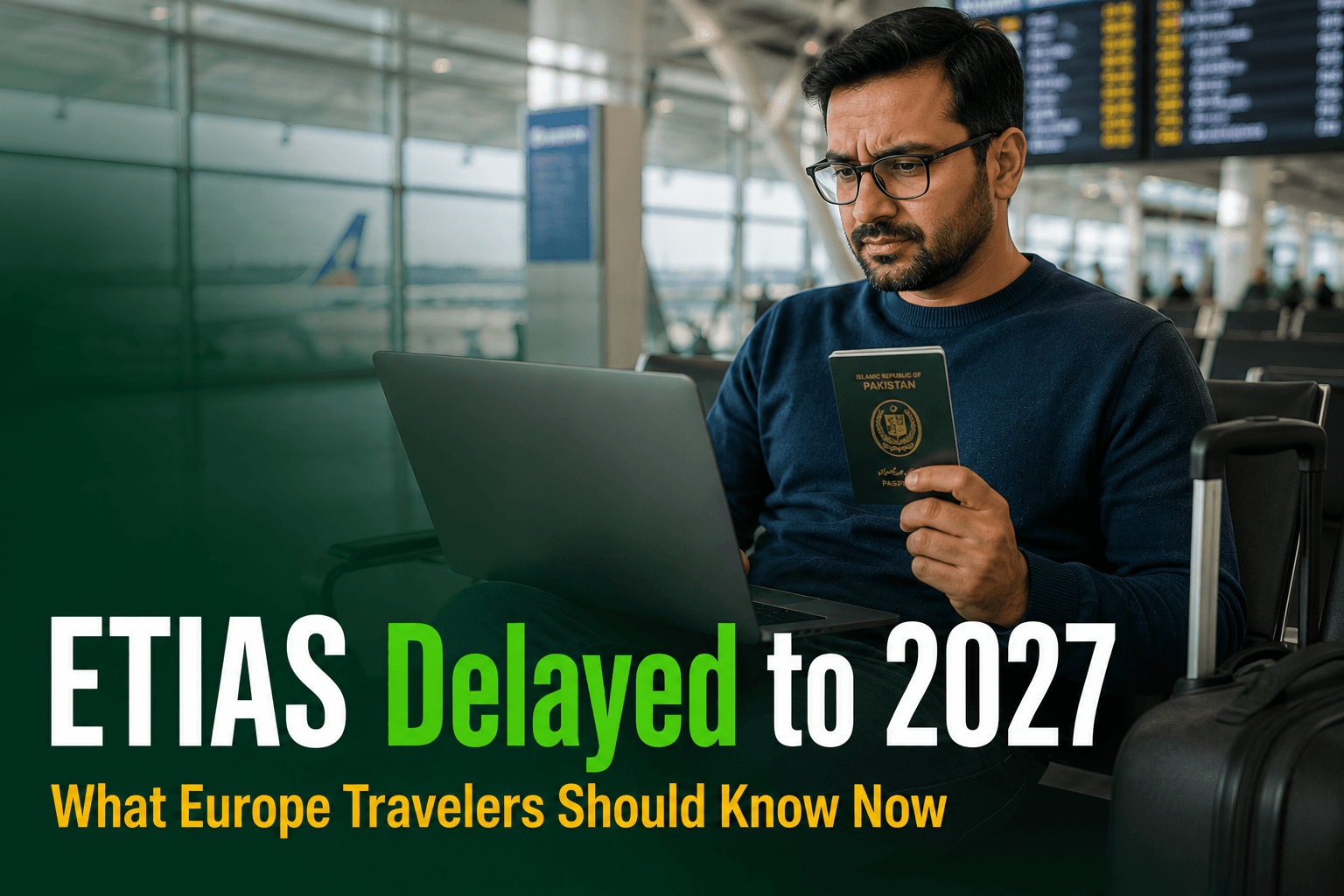
If you've seen headlines telling you to prepare for ETIAS before the end of 2026, that information is now outdated — the EU has quietly pulled its launch target, and the system won't be live this year after all.
What ETIAS Actually Is
The European Travel Information and Authorisation System (ETIAS) is the EU's version of the US ESTA or UK ETA — a simple online pre-travel authorisation required for citizens of roughly 60 visa-exempt countries, including the United States, United Kingdom, Canada, Australia, and New Zealand, before they can enter the Schengen Area for short stays.
It is not a visa. It's a lighter-touch security screening step for travelers who already don't need a visa to visit Europe for tourism, business, or transit purposes under 90 days.
The Delay: What Changed
For most of the past year, the official line was that ETIAS would launch in the last quarter of 2026. That changed in July 2026, when the EU quietly removed this specific timeline from its official ETIAS pages. The pages now state only that a start date will be announced several months in advance of the actual launch.
Reporting from the Financial Times, citing eu-LISA (the EU agency responsible for building the system), indicated that a 2026 launch is "no longer feasible," according to people familiar with internal discussions. eu-LISA's next board meeting, expected in September 2026, is likely to produce a revised timeline — with independent trackers now pointing to a 2027 launch as the realistic outcome.
ETIAS vs. EES: Don't Confuse the Two
Many travelers mix up ETIAS with a separate, already-active system:
| System | Status | What It Does |
|---|---|---|
| EES (Entry/Exit System) | Live since April 10, 2026 | Biometric border registration — fingerprints and a facial photo — recorded by border officers at every Schengen entry and exit |
| ETIAS (Travel Authorisation) | Not yet live — delayed to 2027 | An online pre-travel authorisation you apply for in advance, before booking or traveling |
What ETIAS Will Cost and Cover, Once It Launches
- Fee: €20, confirmed by the European Commission in mid-2025
- Exemptions: Free for travelers under 18 or over 70
- Validity: Up to three years, or until your passport expires, whichever comes first
- Coverage: Applies to entry into 30 European countries within the Schengen Area
- Transition period: At least six months after launch during which travel without ETIAS will still be possible if other entry conditions are met
Does This Affect Pakistani Travelers?
This story matters most directly to travelers from the US, UK, Canada, Australia, and other currently visa-exempt countries — but it's useful context for anyone tracking European travel policy broadly, including dual nationals or those planning trips that combine Schengen countries with visa-exempt travelers in their group.
How to Avoid ETIAS Scams
- Don't pay anyone for ETIAS right now — there is no live system to apply through.
- Ignore websites claiming to offer "early registration" or guaranteed approval before launch.
- Wait for the official EU announcement, expected several months before the actual launch date.
- Bookmark the official domain — travel-europe.europa.eu/etias — and treat any other site requesting payment or passport scans as untrustworthy.
Final Thoughts
If you were planning around an ETIAS requirement for a late-2026 European trip, you can relax — it simply isn't happening on that timeline. The practical takeaway for now: watch for EES-related border delays if you're a non-EU traveler heading to Europe this year, ignore any site trying to collect payment for an ETIAS application today, and wait for eu-LISA's September 2026 update for a clearer 2027 timeline.
Official source: European Union — Travel to Europe